As part of WACA’s Learning Visits programme, we’re connecting with established community businesses to gather practical insights and lessons learned. These visits help us understand different models of community ownership and operation, providing valuable guidance as we develop our own local initiatives. Each visit offers a unique perspective on what makes community enterprises thrive.
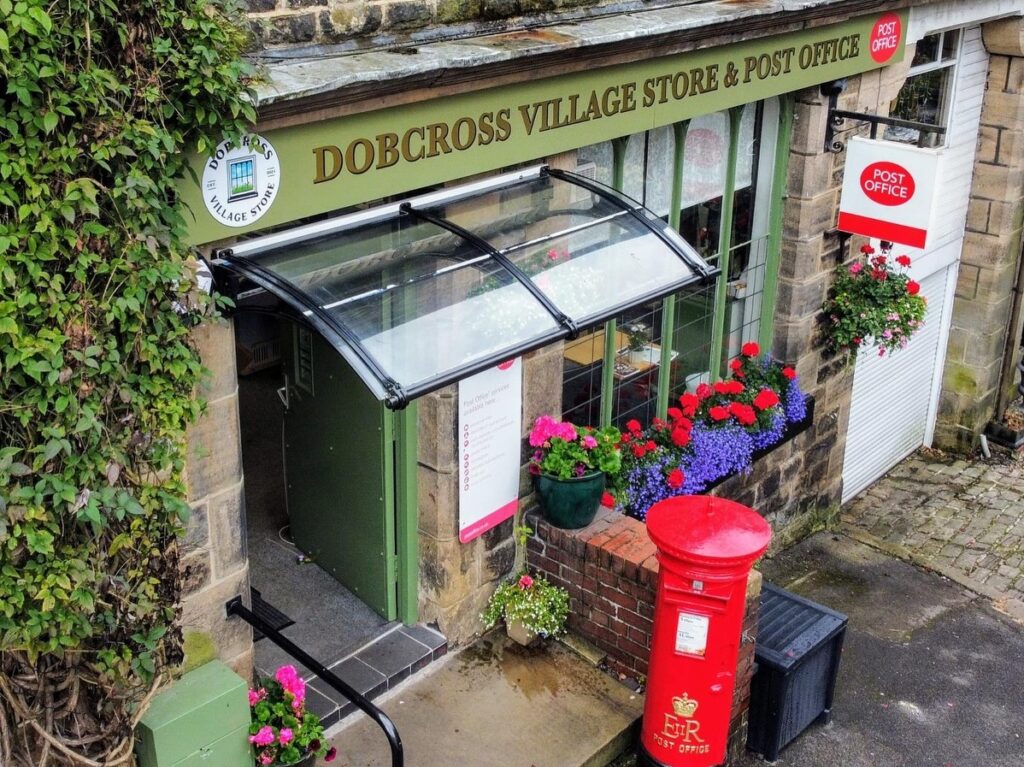
Dobcross Village Store and Post Office
Operating as a Community Benefit Society registered in 2024, this village shop and post office demonstrates how effective community mobilisation can save essential local services. With 124 members recruited from their community of 600 postal addresses, they took over shop operations in April 2024 and the post office in January 2025. The business operates six days a week (Monday-Friday 8:30am-5:30pm, Saturday 8:30am-12:30pm, Sunday 8:30am-11:30am shop only) and is governed by a management committee of twelve with four directors. Their staffing model combines three part-time paid positions (Manager, Assistant Manager, and Post Office Assistant) with thirty volunteers, and they’ve created a ‘cosy corner’ area with tables and drinks machine to encourage social interaction and community cohesion.
Through successful fundraising, they raised £62,000 via community share offer (minimum £250) and secured a £90,000 Community Funding Grant for refurbishment and equipment. Their approach demonstrates how continuity of experienced staff can smooth transitions, with their manager Tim having worked in the shop for eight years before the community takeover.
From our discussions with the Dobcross team, these strategic insights emerged:
Run a publicity campaign using multiple channels (local MP, press, TV, radio, social media)
Find different ‘touch points’ to reach as many people as possible throughout the process
Don’t make membership sound too onerous to potential supporters
Emphasise both social and financial benefits for the wider community
Make use of seasonal events and activities for promotion and engagement
Ensure the manager has fair autonomy whilst maintaining management committee support
When taking over a post office, insist on a Business to Business contract rather than personal guarantors
Their community ownership model has allowed them to improve staff conditions, stock higher quality products, and develop additional community initiatives like a seed bank and plans for herb growing areas and delivery services.
We would like to express our sincere gratitude to Tim Newbold, Louise Stevenson, and Suzanne Wright for sharing their experiences and practical knowledge with us. Their insights into successful community mobilisation and the importance of strong publicity campaigns were particularly valuable. Special thanks also to Julia Sullivan and Catherine from the WACA Learning Visits team for conducting this visit and documenting these important lessons for community shop and post office acquisition.